Why Your Commercial Cooler Is Leaking Water
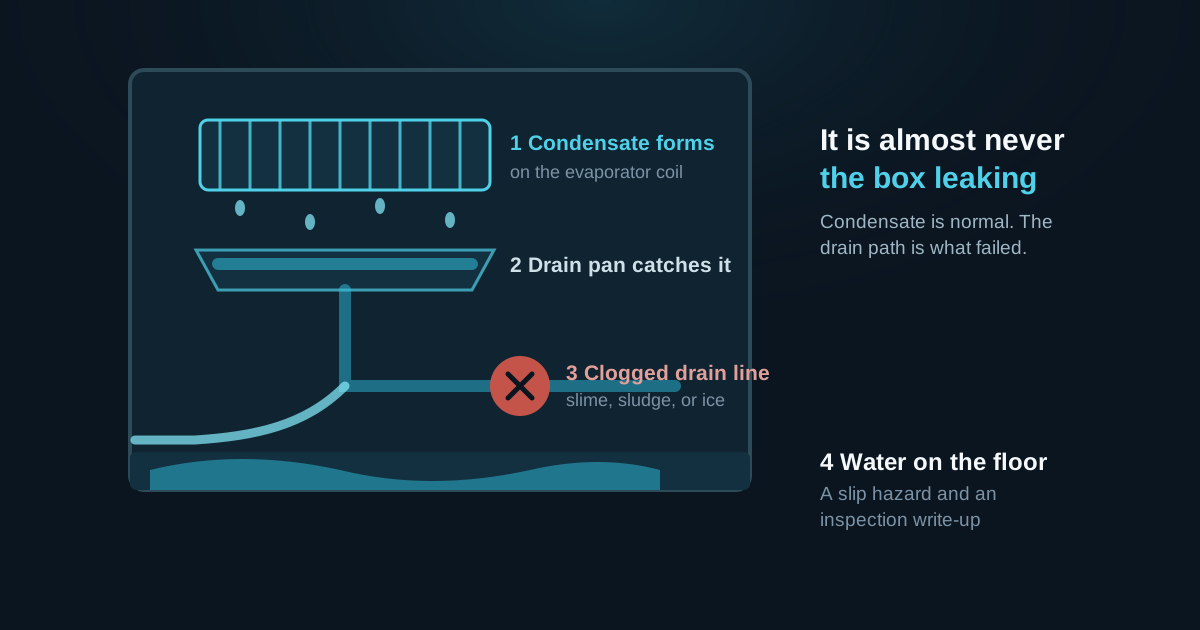
Most kitchens deal with a leaking cooler the same way: somebody mops it twice a shift and everyone agrees to call about it eventually. The mopping is treating a symptom, and the symptom is usually pointing at something specific and cheap to fix.
Your cooler is supposed to make water
This is the part that surprises people. Refrigeration works by pulling heat and moisture out of the air inside the box. That moisture condenses on the cold evaporator coil, drips into a drain pan underneath, and runs out through a drain line. Every cooler and freezer in your kitchen produces water continuously, by design.
So the question is never “why is my cooler making water.” It is “why is that water not leaving through the drain.” Almost every leak call comes down to the drain path.
The five things that actually go wrong
A clogged drain line. This is the number one cause by a wide margin. The drain is a dark, wet tube carrying water that has passed over food surfaces, so it grows biofilm, that slime that eventually plugs the line. Water backs up in the pan and spills over the edge.
A frozen drain line. Common on freezers and on coolers with a defrost problem. The line ices up, water has nowhere to go, and it overflows. If the leak comes and goes on a cycle, suspect this one.
A drain pan that is cracked, corroded, or out of level. Pans rust through, and a box that has settled or been bumped can tilt the pan enough that water runs off the wrong edge instead of toward the drain.
Door gaskets letting humid air in. A worn gasket pulls a steady stream of warm, humid room air into the box all day. That is far more moisture than the drain was sized to handle, so it overwhelms the system even when the drain itself is clear. Around Tyler, this gets dramatically worse in the humid stretch from May through September.
The line outside the box. Drain lines get crushed by a stack of boxes, knocked loose during a delivery, or run uphill by someone who did not know better. Water can only leave if the path out is intact and sloped.
What you can check in five minutes
- Find where the water starts. Water at the base of the door usually means a gasket or a door problem. Water under the coil or from the ceiling of the box points at the pan and drain.
- Look at the drain pan if you can reach it safely. Standing water in the pan means the drain is blocked. A dry pan with water elsewhere means something else.
- Run a hand along the gaskets. Feel for cold air escaping or spots where the seal does not close.
- Trace the drain line to where it exits. Look for a kink, a crushed section, or a line that has come unhooked.
When it is not a drain problem
A few signs mean stop troubleshooting and call:
- Oily residue with the moisture. Refrigerant leaks carry oil. That is not condensate and it is not a plumbing issue.
- Water plus a box that is warming up. Now the leak is a symptom of a bigger refrigeration fault, usually defrost related, and the product is what is at risk.
- Ice building up along with the water. That is an airflow or defrost fault, not a clog.
Why this is worth fixing properly
A puddle in a kitchen is a slip hazard first and an inspection problem second. Standing water near a walk-in also gets written up, encourages mold at the wall base, and will eventually rot flooring and door frames. The repair is almost always minor. The damage from ignoring it for a year is not.
Clearing and sanitizing drain lines is standard on a maintenance visit, which is why kitchens on a schedule rarely make this call. If you have water on the floor right now, we handle walk-in cooler repair and reach-in cooler and freezer repair across Tyler and East Texas, and preventive maintenance keeps the drain from being the thing that surprises you.