Commercial Ice Machine Installation: Getting It Right
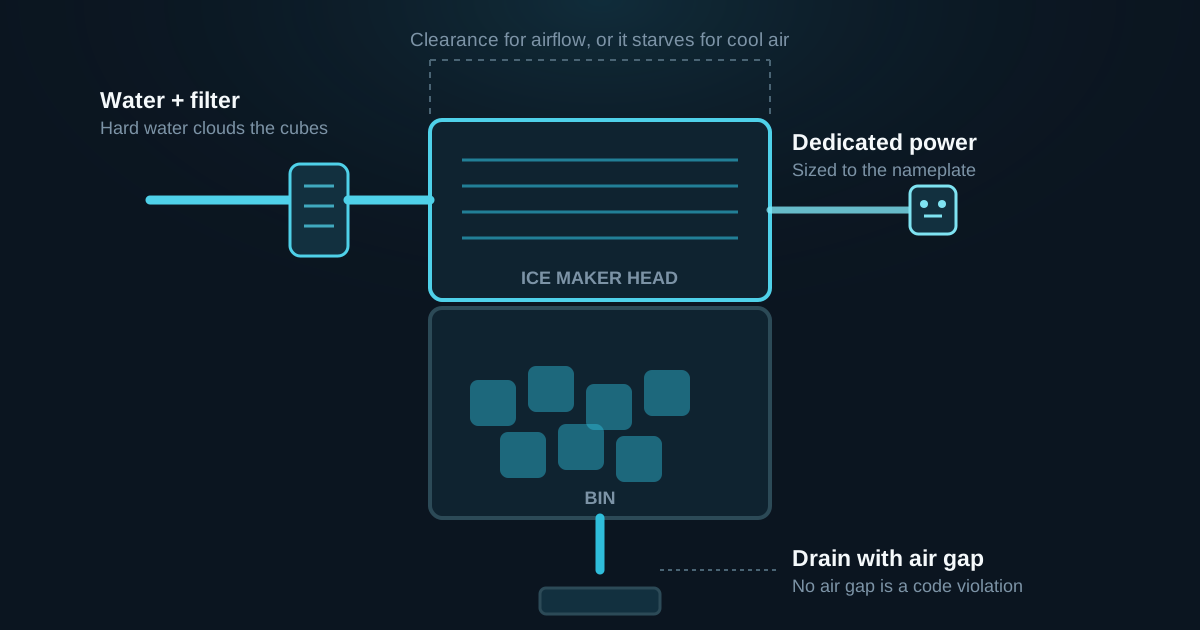
An ice machine is the piece of equipment most often installed badly, because it looks like it only needs water, a drain, and a plug. It does need those three things. It needs them done to spec, and when they are not, the machine underperforms for its entire service life and nobody ever connects the two.
Here is what actually matters.
Size it for your peak, not your average
The number on the spec sheet is production over 24 hours under ideal lab conditions: cool room, cold water supply, clean machine. Your kitchen is none of those.
Two adjustments matter. First, real-world output in a hot back-of-house with warm supply water can land well below the rated figure. Second, you do not consume ice evenly across 24 hours. A restaurant burns most of its ice between 11am and 2pm and again at dinner. A machine that technically makes enough per day can still run the bin empty at 1pm every day.
Size against peak demand plus bin storage, and build in headroom for summer, when both your demand and the machine’s workload go up together.
Water quality is the whole ballgame here
This is the single biggest thing people skip, and around Tyler it is the one that bites hardest. East Texas water is hard, and every gallon through the machine leaves minerals behind on the evaporator and in the water system. That scale insulates the plate, slows production, and turns out the cloudy, soft cubes we wrote about in why your ice machine makes cloudy cubes.
Filtration at install is not an upsell, it is the difference between cleaning the machine twice a year and fighting it constantly. Size the filter to the machine’s flow rate, and put it somewhere a person can actually reach to change the cartridge. A filter buried behind a fixed cabinet will not get serviced, which makes it decorative.
The drain has rules
Ice machine drains are held to a higher standard than most equipment because the machine handles food. Three things matter:
- An air gap. The drain must not connect directly to the waste line. A direct connection risks siphoning waste water back toward the ice, and it is a code violation nearly everywhere.
- Slope. The line has to fall consistently. A drain line that runs level or dips will hold water, grow biofilm, and back up into the bin.
- A separate bin drain. The bin and the head usually drain separately. Tying them together incorrectly causes overflow that looks like a machine fault.
Clearance and air temperature
Air-cooled machines reject heat into the room. Boxed into a tight alcove or shoved against a wall, the machine re-breathes its own hot exhaust and production falls off a cliff. Manufacturers publish minimum clearances at the top and sides. They are not padding.
Ambient temperature matters just as much. A machine in a 95°F back room will never hit its rated output no matter how new it is. If the only available spot is hot and tight, that is an argument for a remote or water-cooled configuration, and it should be settled before the equipment is bought.
Power to the nameplate
The machine needs a circuit sized to its nameplate, not whatever outlet happens to be nearby. Sharing a circuit with other kitchen equipment causes nuisance trips that get blamed on the ice machine for years.
Commissioning is part of the install
A machine is not installed when it is plugged in. It is installed when someone has watched it complete harvest cycles, verified the cube is forming fully and releasing cleanly, checked for leaks at every connection, confirmed the bin controls shut it off correctly, and sanitized it before first use. Ice is food, and a machine that was never sanitized at startup begins its life already behind.
Why the install decides the next five years
Almost every chronic ice machine complaint traces back to install decisions: undersized for peak, no filtration in hard water, a drain that holds water, or a cabinet with no room to breathe. Those are not repairs you can make later without redoing the installation.
We handle commercial refrigeration installation, including ice machines, across Tyler and East Texas, and ice machine repair when an existing unit is not keeping up. If a machine you already own is struggling, it is worth checking the install before assuming the equipment is worn out.