5 Reasons Your Reach-In Cooler Stops Holding Temp
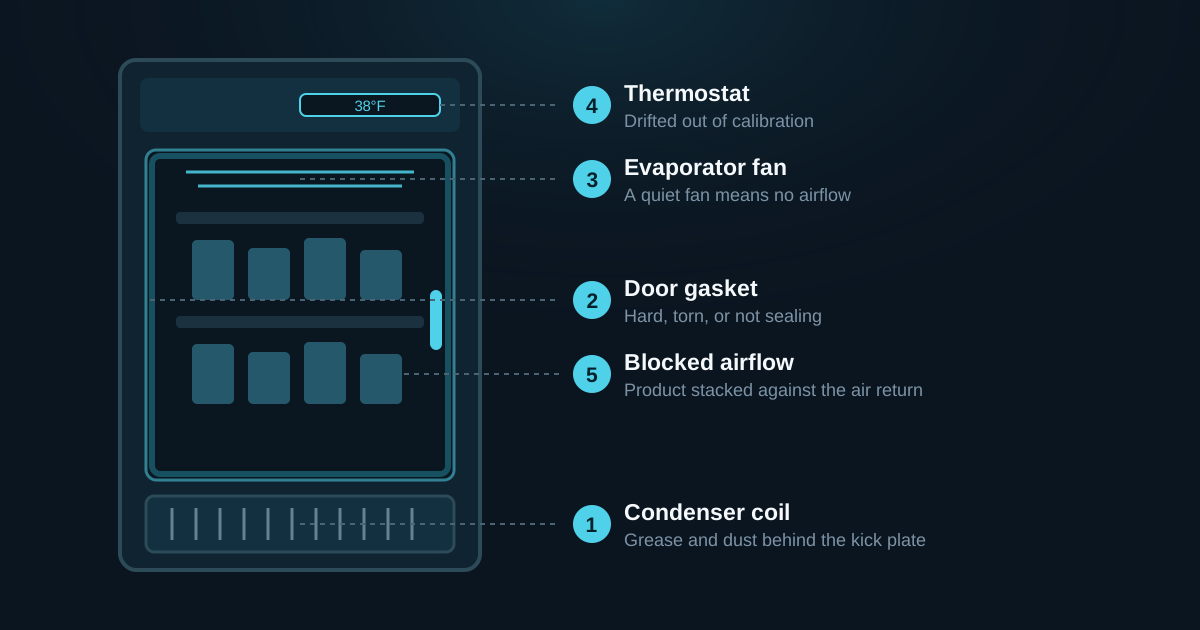
Reach-ins, undercounters, and prep tables are the units that fail most in a commercial kitchen, and it is not because they are built worse. It is because they work harder. A walk-in door opens a few dozen times a shift. A prep table opens hundreds of times, holds a small volume of air that dumps instantly, and keeps its condenser coil at floor level in the greasiest room in the building.
Here are the five faults behind most warm reach-ins, roughly in the order worth checking.
1. The condenser coil behind the kick plate
This is the first thing to look at and the most commonly ignored. The coil sits inches off a kitchen floor, pulling in air full of grease vapor, flour dust, and lint. It cakes over into a felt mat that traps heat instead of rejecting it.
The unit still runs. It still feels cold when you open it. It simply cannot dump heat fast enough, so it runs longer and longer and eventually stops reaching temperature on a busy afternoon. Pull the kick plate. If you cannot see daylight through the fins, you found it.
2. Door gaskets
Gaskets on reach-ins take constant abuse: slammed doors, pan corners, cleaning chemicals. They go hard, tear at the corners, or pull out of the channel. A gasket that does not seal is a permanent open window into a small box.
Quick test: close the door on a dollar bill and pull. If it slides out with no drag, the seal is gone at that spot. Check several points around the door, not just one.
3. The evaporator fan
The evaporator fan moves cold air over the product. When its motor fails, the coil still gets cold but nothing distributes that cold, so you get a frosted coil and a warm cabinet at the same time. It is a confusing symptom that makes people think the unit is low on refrigerant.
Open the door and listen. On most reach-ins the evaporator fan runs when the door is open, or you can hear it before you open. Silence, or a fan that grinds and rattles, is the answer.
4. Thermostat drift
Mechanical thermostats drift over the years. The dial says 36°F, the box actually sits at 45°F, and nobody notices because the dial has not moved. This is the failure most likely to quietly cost you an inspection, because everything looks fine and nothing sounds wrong.
Never trust the dial or the built-in display alone. Put a calibrated probe thermometer in the box, in product, and compare.
5. Overloading and blocked airflow
The cheapest failure of all. Pans stacked against the back wall, product piled over the air return, a full load of warm prep dropped in at once during a rush. Air cannot circulate, so some of the box is at temperature and some of it is not.
If your top shelf near the door reads 44°F while the back reads 37°F, you do not have a broken unit. You have a loading problem, and it is worth training out before it becomes a violation.
The two-minute check before you call
- Pull the kick plate and look at the condenser coil.
- Dollar-bill test the gasket at four points around the door.
- Listen for the evaporator fan.
- Put a real thermometer in product and read it at the afternoon peak.
- Look at whether product is blocking the air return.
Four of those five you can fix or improve yourself, and that is the point. Reach-ins mostly fail from neglect rather than from breaking.
When it is the sealed system
If the coil is clean, the gaskets seal, the fan runs, and the box still will not pull down, you are into refrigerant, the compressor, or the controls. Those need gauges and a tech. The tell is usually a unit that runs continuously without ever reaching its setpoint, sometimes with frost on the suction line.
We handle reach-in cooler and freezer repair throughout Tyler and the surrounding towns, and coil cleaning and gasket checks are standard on preventive maintenance, which is what keeps items one and two off this list entirely.