Walk-In Cooler Temperature: What Inspectors Check
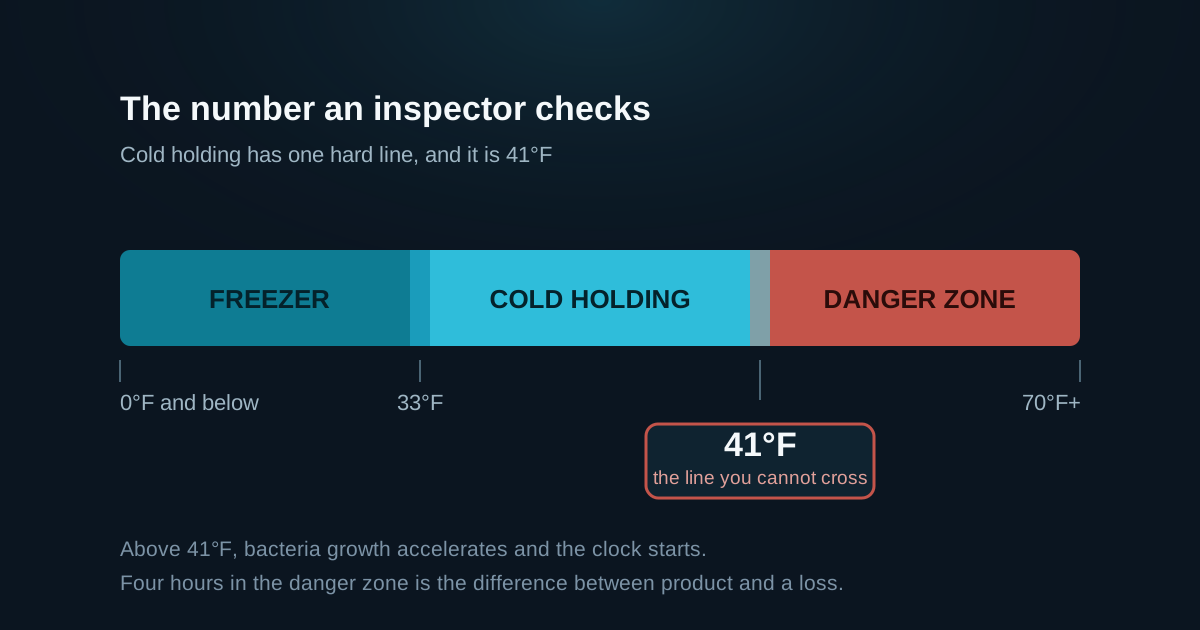
Most kitchens fail a temperature check for a boring reason: nobody was measuring the thing the inspector measures. The equipment was usually telling the truth for weeks beforehand. Here is what the number actually needs to be, where to take it, and what it means when your box will not hold it.
The line is 41°F
Under the FDA Food Code, which the Texas Food Establishment Rules follow, cold holding for potentially hazardous food is 41°F or below. Freezers are judged on keeping food frozen solid rather than on hitting a specific air temperature. Local health departments can differ on details and enforcement, so confirm specifics with your county, but 41 is the number that matters nearly everywhere.
The thing to understand is that 41°F is a food temperature, not a thermostat setting. An inspector is generally probing product, not reading your wall gauge.
Where to measure, and why your wall thermometer lies
The dial thermometer hanging by the door tells you the air temperature in one spot near the door, which is the warmest, most disturbed air in the box. It is nearly useless as a compliance number.
Measure like an inspector would:
- Probe actual product, in the geometric center of the item, not the surface.
- Check several places: near the door, at the back, top shelf and bottom shelf.
- Use a calibrated probe thermometer, and calibrate it in ice water regularly.
- Take the reading at the daily peak, not at 8am when the box has had all night to recover.
If your back corner reads 38°F and the top shelf near the door reads 44°F, you do not have a cold box with a warm spot. You have an airflow problem that will eventually be written up.
Afternoon drift is the failure nobody sees coming
The most common pattern behind a surprise violation: the walk-in reads fine every morning, drifts up through service, and peaks in the late afternoon. Staff check it at opening, see a good number, and log it. The inspector arrives at 3pm.
A box that only holds temperature overnight has no capacity left. It is already failing, just not at a time anyone is looking. Logging temperatures at the daily peak rather than at open is the single cheapest change most kitchens can make.
What actually pushes a cooler over the line
- A condenser coil packed with grease and dust, so the system cannot reject heat.
- Door gaskets that have hardened or torn, bleeding warm air in all day.
- Low refrigerant from a slow leak, which shows up as gradually worse afternoons.
- An iced-up evaporator coil, usually from a defrost fault, choking airflow.
- Overloading the box or blocking the evaporator so air cannot circulate.
- Propping the door during deliveries, which is a habit rather than a fault.
If you are above 41°F right now
Move product to a box that is holding, keep the doors shut, and get the temperature and the time written down. That log matters both for your own food-safety decisions and for showing an inspector you caught it and acted.
Food held above 41°F is on a clock. Depending on how long and how warm, it may need to be discarded. That call belongs to you and your local health authority, not to a repair tech, but the faster the box comes back into range the less of that call you have to make.
Passing is a maintenance outcome
Nearly every failure above traces back to something visible weeks earlier: a dirty coil, a tired gasket, a slow leak, a defrost cycle that stopped terminating. Scheduled service catches those on your calendar rather than the inspector’s.
If your box is drifting now, we handle walk-in cooler repair around the clock in Tyler and the surrounding towns, and preventive maintenance with documented temperature checks is what turns inspection day into a non-event. When a box is already climbing and there is product on the line, that is an emergency call, not a morning problem.