Walk-In Cooler Warming Up? Your First-Hour Checklist
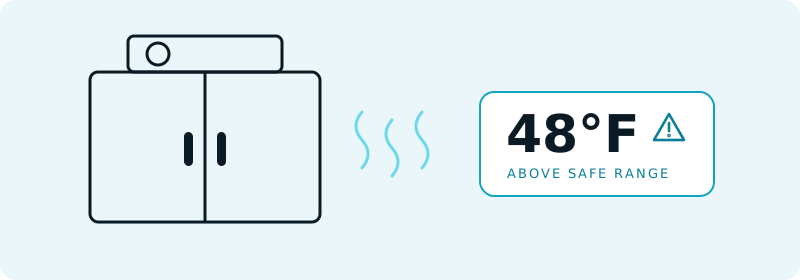
When a walk-in starts warming, the first hour decides whether you lose a shelf or a weekend’s worth of inventory. Panic doesn’t help; a short, calm checklist does. Here’s the order East Texas kitchens should work through.
Confirm it’s actually warming
Before anything, get a real number. Check the box thermometer, and if you don’t trust it, put a probe thermometer between two packages near the middle of the walk-in. Anything creeping above 41°F for refrigerated product is the danger zone. Note the temperature and the time; you’ll want that timeline later, both for the tech and for your own records.
Keep the doors shut
Every time the door opens, warm, humid East Texas air pours in and the coil has to fight it. Pull what you need for the next hour in one trip, then keep it closed. A cooler that’s only slightly warm can often ride out a repair as long as nobody keeps opening it.
Move the most vulnerable product
Dairy, raw proteins, and anything already near its limit should move first. If you have a second cooler, a reach-in, or a freezer with room, shift the high-risk items there. A few ice-filled bus tubs buy time for whatever can’t be moved.
Two things you can safely check yourself
- The condenser coil. On most walk-ins the condensing unit sits on top of the box or just outside. If the coil is caked with grease and dust, it can’t shed heat. A filthy coil is one of the most common reasons a box drifts warm in the summer.
- The evaporator inside. If the coil is a solid block of ice, you’ve likely got a defrost problem. Don’t chip at it; just note it for the tech.
What not to do
Don’t keep resetting a breaker that trips; a unit that trips repeatedly needs a tech, not another reset. Don’t add a box fan and hope; it moves air, not heat. And never pour hot water on an iced-up coil.
When to call
If the box is above 41°F and climbing, or you’ve spotted a leak, an iced coil, or a compressor that won’t run, that’s a call, not a wait-until-morning. The sooner a tech is on the way, the more product survives. Dispatch answers around the clock; have the unit’s make and model handy if you can find it, along with the temperature timeline you started at the top of this list.
We handle walk-in cooler repair and 24/7 emergency refrigeration service across Tyler and East Texas. If this is a repeat problem rather than a one-off, preventive maintenance is usually what breaks the cycle.