Why July Kills More Coolers Than Any Other Month in East Texas
Ask any refrigeration tech around Tyler when the phone rings most and you’ll get the same answer: the first triple-digit stretch of summer. Heat doesn’t break equipment at random. It’s a load test, and it finds every weakness you’ve been getting away with since spring: the furred-over condenser coil, the gasket that almost seals, the compressor that was already tired. Here’s what the heat is actually doing to your boxes, and how to get ahead of it.
The heat hits twice
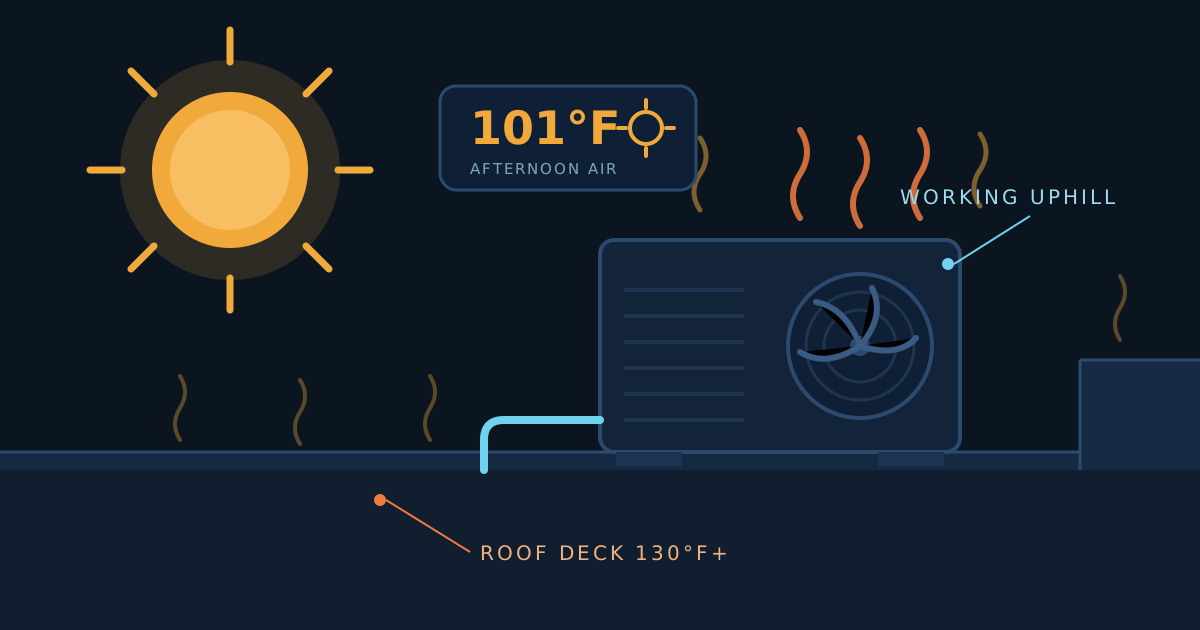
A refrigeration system is a heat pump. It moves heat from inside the box out to the condensing unit, which dumps it into the surrounding air. When the surrounding air is 101°F, or 130°F on a dark roof, the system has to push against far higher pressure to reject that heat, and its capacity drops. Then the second hit lands: every door swing now pulls in hotter, wetter air, so there’s more heat and humidity to remove with less capacity to do it. Run times stretch out, and a system that coasted through April runs flat-out through July.
The afternoon creep is a warning, not a pass
The classic summer pattern: the walk-in reads 37°F at 8am, drifts to 43°F by late afternoon, then recovers overnight and everyone shrugs. Don’t. A box that only holds temperature after the sun goes down has zero headroom left. One more degree outside, one more layer of dust on the coil, or one busy Friday of door traffic, and it stops recovering at all, usually on the worst possible weekend. Log your temperatures at the daily peak, around 4 to 6pm, not at opening. That’s the number that tells the truth.
Where the heat finds its victims
Dirty condenser coils. A mat of dust, pollen, and kitchen grease on the condenser is a blanket on the one component whose entire job is shedding heat. It’s the single most common reason boxes drift warm in summer. If you can see fuzz on the coil, it’s already costing you.
Starved condensing units. Outdoor and rooftop units need room to breathe. Weeds, fence lines, stacked patio chairs, and stored junk within a couple of feet make the unit recirculate its own hot exhaust, which is like asking it to work in a closed garage.
Worn gaskets and missing strip curtains. With the dew point in the 70s, every leak is a steady stream of humidity the evaporator has to freeze out, which means more icing and more defrost load. The paper test takes ten seconds per door.
Blocked evaporator airflow. Summer deliveries get hot-loaded in a hurry and stacked into a wall in front of the fans. The coil can’t cool air it never sees. Get warm product into the box quickly, but spread it out and leave air gaps.
Marginal compressors and fan motors. Parts that survived mild weather fail under sustained high head pressure. There’s no owner fix here, but there is an early warning: a compressor that’s suddenly louder, short-cycling, or tripping breakers is announcing its retirement. That’s a call before it’s an emergency.
The cheapest hour of the summer
A mid-season visit, with a proper coil cleaning, gasket check, pressure and temperature readings, and fan amp draws, is boring on purpose. It’s also the difference between an August you don’t notice and an August that costs you a walk-in of product plus an after-hours repair. If your equipment hasn’t been looked at since spring, preventive maintenance in July pays for itself the first time it keeps you off the cold line at 2am.
One East Texas footnote: summer storms and grid-strain brownouts can knock controls sideways. After any power blip, walk your boxes and confirm everything restarted and is pulling back down to temperature. A unit that didn’t come back is a lot cheaper to catch at 9pm than to discover at 6am.
If a box is already losing the fight
Above 41°F and climbing through the afternoon with no recovery, a compressor roaring or cycling on and off, breakers tripping: work the first-hour checklist and get a tech moving. Emergency service runs around the clock precisely because July doesn’t keep business hours.
Dispatch answers 24/7 at 903-501-COLD. The call is free, and in this heat, waiting is the only move guaranteed to cost you.