Frost Taking Over Your Walk-In Freezer? Here's What the Ice Is Telling You
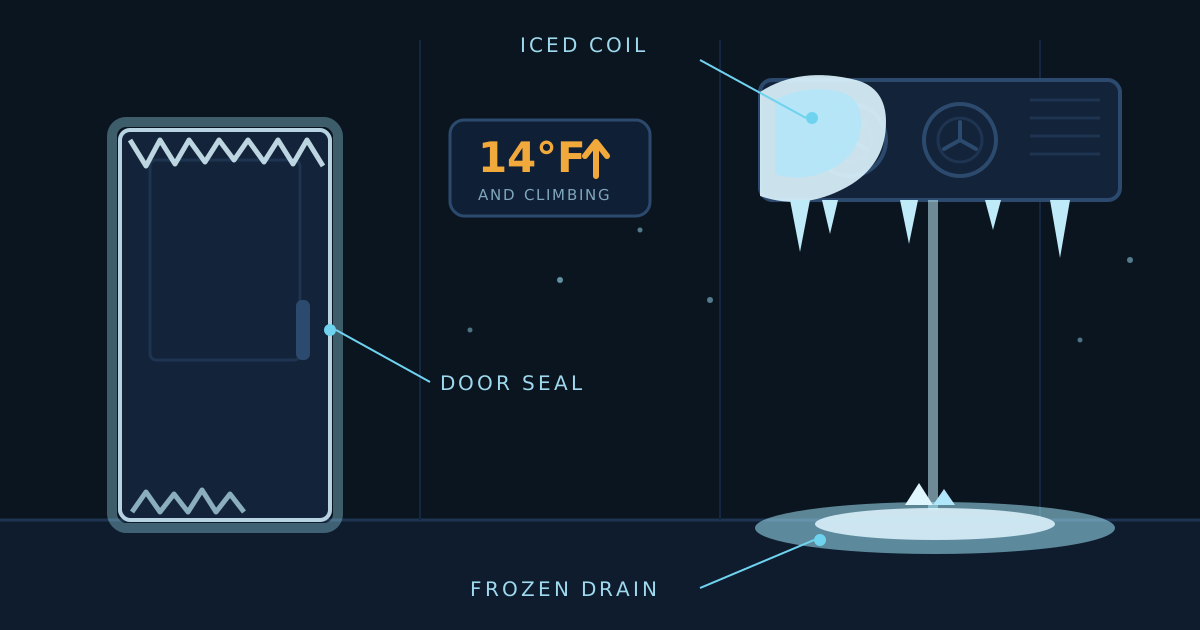
A thin, even coat of frost inside a walk-in freezer is normal life at 0°F. Ice is different. When the coil disappears into a white block, icicles hang off the fan housing, or a sheet forms on the floor, the freezer is telling you exactly where its problem is. In East Texas, where every door swing pulls in air that’s 90°F and swampy, the story is usually easy to read.
Why frost piles up faster here
Every time the door opens, humid outside air rushes in and its moisture freezes onto the coldest surfaces it can find. The freezer is built for this: several times a day, the defrost cycle warms the evaporator coil just enough to melt the buildup, and the water runs out through a drain line. Frost only wins when something in that loop breaks. Either the defrost cycle stops doing its job, the drain can’t carry the water away, or the door lets in far more humid air than the system was designed to handle. July and August, when the dew point sits in the 70s, is when the weak link shows itself.
Read the frost map
Where the ice forms tells you what failed.
Ice around the door frame, or on the ceiling just inside the door. Humid air is leaking in at the door: a worn gasket, a door that doesn’t quite latch, a failed closer, or strip curtains that got torn down and never rehung. If the door itself keeps freezing shut, the small heater wire in the frame has likely quit. Either way, the fix is door hardware, not the refrigeration system.
The evaporator coil buried in ice. If the finned coil behind the fan guard looks like a glacier, airflow is weak, and the box is warming while the unit runs nonstop, the defrost system has failed. That’s usually a defrost timer, heater, or termination thermostat. The ice is the symptom; the dead component is the problem.
A sheet of ice on the floor under the evaporator, or icicles off the drain pan. Defrost is working, but the melt water has nowhere to go. The condensate drain line is clogged or frozen, often because its heat tape died. Every defrost cycle adds another layer to the skating rink, which is a slip hazard for your crew long before it’s a refrigeration problem.
Heavy frost on packaging near the door, but a mostly clean coil. That’s temperature swing from door traffic, not a mechanical fault. Tighten up door discipline and it clears on its own.
What you can safely do yourself
Close out the easy causes first. Do the paper test on the gasket: shut the door on a strip of paper and pull. If it slides out with no resistance, the gasket isn’t sealing at that spot. Confirm the door actually latches and the closer pulls it home. Rehang strip curtains if they came down. And stack product with air gaps so the evaporator fans can breathe, instead of building a wall of boxes in front of them.
What not to do
Do not chip at coil ice with a screwdriver, scraper, or anything else. The aluminum fins bend easily, the refrigerant tubing behind them punctures easier than you’d think, and a punctured coil turns a cheap defrost part into a coil replacement. Don’t pour hot water on it either. And resist the manual-defrost trap: shutting the box down overnight to melt everything off feels like a fix, but if the cause is a dead defrost heater or a leaking gasket, the ice is back within two weeks, and your inventory rode a temperature roller coaster in the meantime.
When it’s a call, not a chore
Frozen product should sit at 0°F or below and stay hard to the touch. If the coil is iced solid, the temperature is climbing out of single digits, water keeps reappearing on the floor, or the door won’t seal or won’t open, that’s walk-in freezer repair territory, and the sooner a tech clears the real fault, the less product thaws. If the box is warming fast, the same logic as our walk-in cooler first-hour checklist applies: keep the door shut, get a real temperature reading, and get help rolling.
Dispatch answers 24/7 at 903-501-COLD. Describe the frost pattern you’re seeing and the dispatcher will know exactly what the tech needs to bring.